Biennale de l'Image en Mouvement 2026: Becoming the Ocean, at Quechlet El Attarine, Tunis, Tunisia
24 October - 22 November 2026
With newly commissioned works by Tabarak Allah Abbas, Younès Ben Slimane, Mona Benyamin, S.A. Chavarría, Leena Habiballa, Roman Selim Khereddine, Zein Majali, Alaa Mansour, Paulo Nazareth, Liv Schulman, Diane Severin Nguyen, Hildegard Titus, Natasha Tontey, Castiel Vitorino, Hajra Waheed, Sarah Zeryab
24 October 2026, 2pm
Entering through the souk, one steps from one scene to another of overlapping activities. The usual business of selling and shopping gives way to the bustle of cheering and chatting. The exhibition, the building and its two and a half floors and many rooms, the visitors, the people filming, the people being filmed. A lot of people seem to be documenting the opening, among them a friend who turns his camcorder towards a new acquaintance to make him, a young man living on the streets and not used to art contexts, his main subject. Paradoxically, being filmed seems to make him feel less out of place, while somehow softening the curious/suspicious gazes directed at him. At least ten attendees carry cameras; it is difficult to tell who works for whom, if anyone.
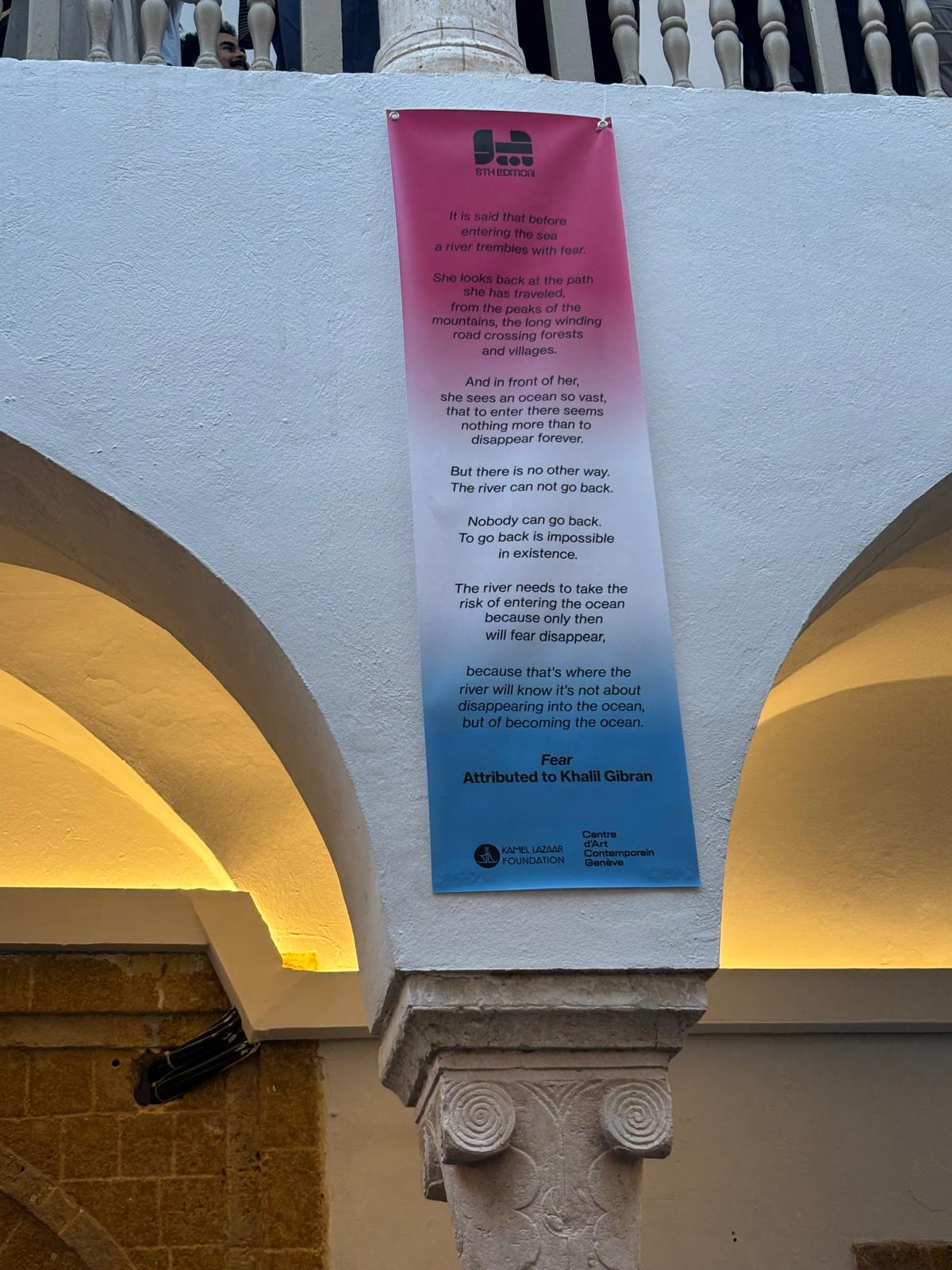
From the upper floor (Quechlet El Attarine being a former barracks, with rooms distributed around a central courtyard on the ground floor and a circular balcony above), one can discreetly observe the comings and goings. A good vantage point from which to take in all the little scenes unfolding simultaneously. Not everyone has come specifically for the opening: passers-by wandering in from the souk seem to be enjoying themselves. The many kids and teens seem to be doing their own thing, while the adults chat here and there. (Shout-out to the boy wearing a “True Artist” sweater.) Pink and red seem to be the biennale's dominant colours, down to the neon lights illuminating the bar and its adjoining library, a retreat covered in what seems to be a hundred carpets (mind your step—I did trip—more than once).
Some familiar faces, but mostly new ones. I feel slightly external to the effervescence. Although I work in the field and consider most people here colleagues, I am attending solely as a member of the audience (and also as the partner of one of the artists presenting a new work). Funny, how much more room there is to notice curious looks when you are not busy making small talk.
As usual, thanks in no small part to the Swiss government's substantial support for art abroad, Swiss art people from both sides of the Röstigraben are present. Yet, within my otherwise rather Western-centric experience of contemporary art circuits and bubbles, I do not feel that the programme or its audience have been assembled as an exercise in tokenism, which is (sadly) refreshing to me. This impression is informed, in part, by the Kamel Lazaar Foundation’s stated position and commitments (the foundation is a co-organiser of BIM26), by the co-curator Lina Lazaar's opening speech (to which I return below), by the show’s presentation text, and, most importantly, by the substance and quality of the works themselves. I have deliberately refrained from discussing the individual works here, partly for lack of space and partly because this is an opening report and not a review. However, this is not a lack of enthusiasm about the biennale. On the contrary, I would encourage anyone who can to see the works in Tunis, or later as they travel to Venice, Brussels, Geneva or London. What interests me here is not only what is being shown, but how the event is being inhabited: who is attending, who feels at ease, who is working, who is watching, who is being watched.
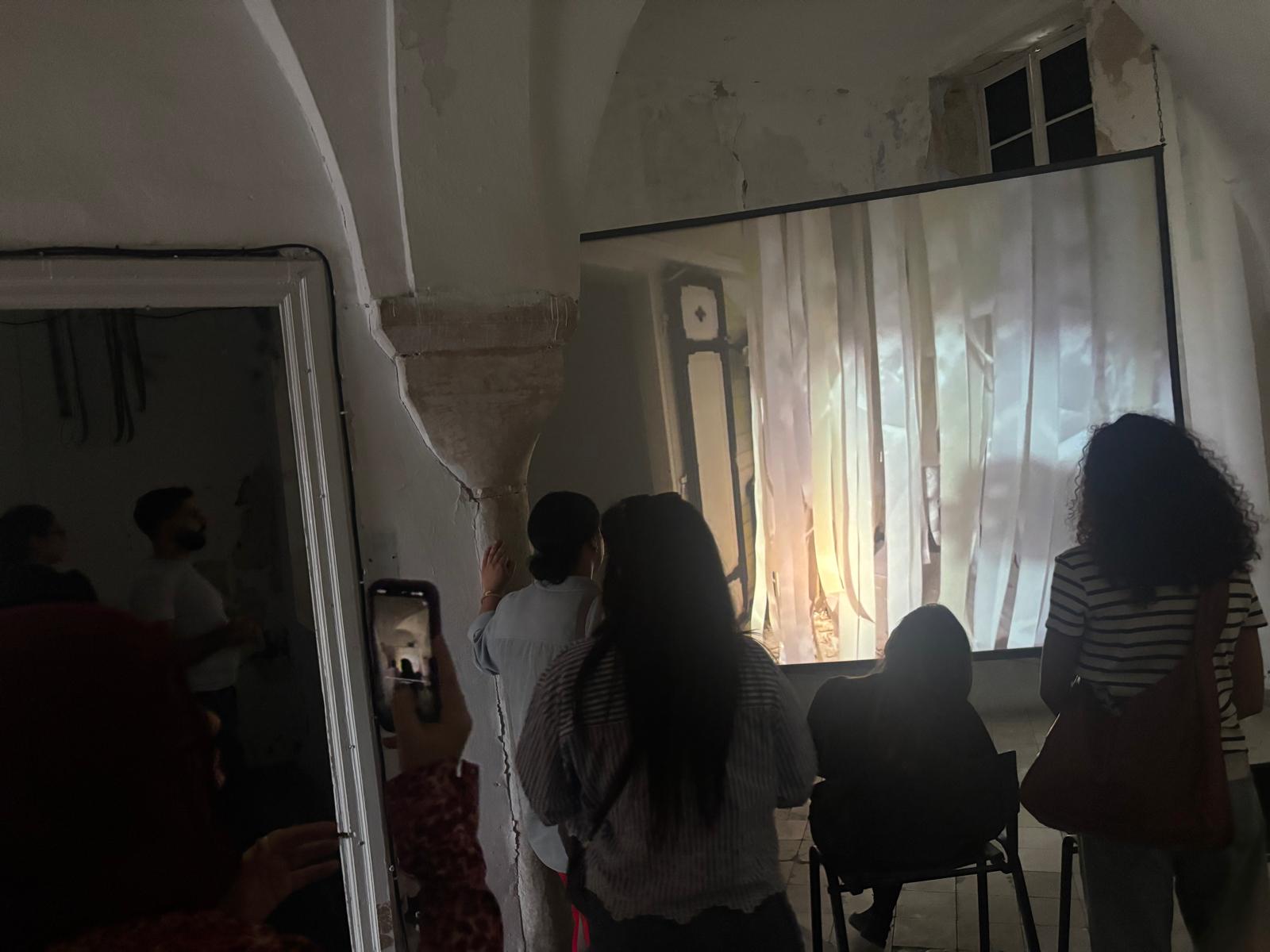
The works are distributed across individual rooms, each filled with people attentively watching the projections, sometimes accompanied by sculptural installations. Someone has taken the time to light little pyramids of incense in some of the rooms.
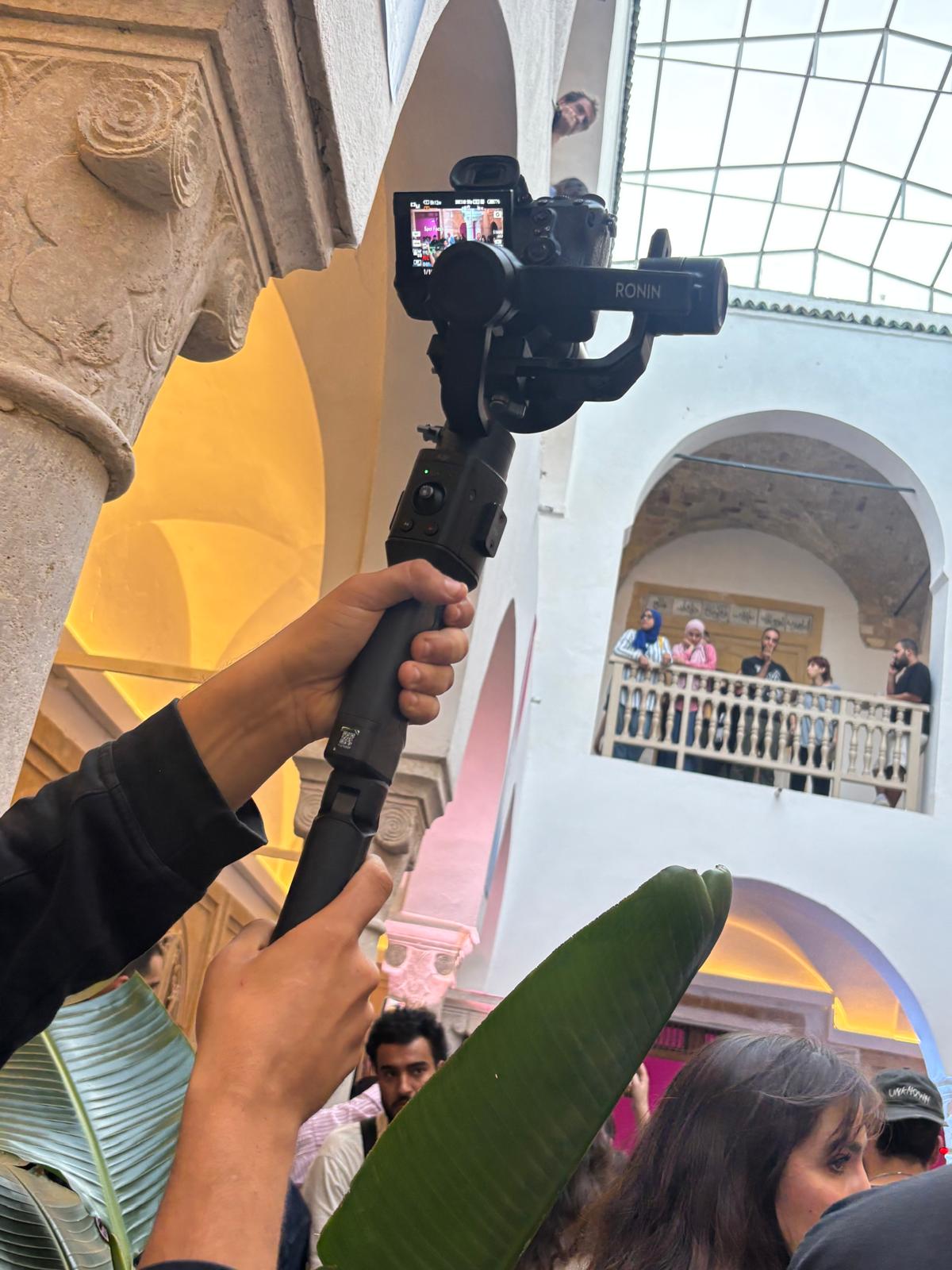
The speeches eventually begin, although the chatting does not stop as the first speaker, Kamel Lazaar, addresses the audience in Arabic. Lina Lazaar then takes the floor in English. One of her colleagues strongly whispers “shhhh”, this time it works. Among the fragments I manage to catch are references to gathering “against the backdrop of an ongoing genocide”, the importance of naming these realities and creating spaces for encounter. She talks about Tunisia, “where the horizon of possibilities seemed to open in 2011”, and speaks of “this land that has welcomed people from elsewhere for millennia”. The newly commissioned works, she explains, are part of “the continuation of a history that has shaped who we are”. I am not entirely sure about the contours of this “we”, but I feel relieved not to experience the cognitive dissonance that so often accompanies openings of major contemporary art events (although I was not in Paris this year during the week of the art fairs). Lazaar speaks of continuity, life and “preservation through use”, mentioning that the building was “falling apart until a week ago”. It’s hard not to think of the care invested in the whole undertaking, embodied, among other things, in those little incense cones and in the workers and technicians who were still putting the venue together until minutes before the opening.
Andrea Bellini, director of the Centre d’Art Contemporain Genève and co-curator of the biennale, follows. He starts by praising his colleague and co-curator for not taking a maternity leave, “out of her dedication for art and culture”. Luckily no cognitive dissonance here either, as several startled looks were exchanged among the audience. He then goes on with contextualizing the BIM and thanking (most of) his colleagues and stakeholders involved in this year’s edition, except the artists. Later, while being locked out of our hotel because the receptionist supposed to open the door had fallen asleep, I found myself waiting with other BIM artists, who were low-key annoyed about not having been mentioned by name during the opening speeches. After all the talk of collective work, continuity, community and care, the artists themselves had somehow slipped out of the picture.
The evening continued in an almost festival vibe, where one needed to sneak out of the musical performance by Chuquimamani Condori before its end to catch the stage contributions by rita el hajj, Trân Tran and Orfelo Aurora Lili a few hundred meters away at the Centre culturel Bir Lahjar, followed by Zein Majali's at the Église Sainte-Croix, before rushing off to the invitation-only opening dinner.
While staying a little longer in Tunisia, and then again while finishing this report back in Switzerland, I find myself still just as enthusiastic about the sixteen new works, especially as I recall the energy of the fifty-something man pacing around the entrance hall of Quechlet El Attarine, wearing a “Gen Z” cap and a T-shirt reading “Unspoken feelings are unforgettable”.
The Biennale of the Moving Image (aka the BIM) has been taking place in Geneva since 1985. Since 2014 it has shifted towards presenting a “smaller” number of international artists (in Andrea Bellini's own words during his opening speech), each commissioned to produce a new work. Each edition is co-curated by Bellini and an invited curator. In 2026, this is Lina Lazaar, Tunisian curator and president of the Kamel Lazaar Foundation, founded in the 2010s with her father. This edition marks the first time the BIM takes place away from its historical home.
Title image credits: A camera during the opening speeches, 2026.