“The daily process of photographing myself that must always begin again.”1
This journal entry by Alix Cléo Roubaud could serve as the motto of Si quelque chose noir, curated by Hélène Giannecchini at Galerie Buchholz (10 September to 14 November 2026). The exhibition presents the series made by Roubaud in August 1980, in Saint-Félix, southwestern France. There, in the attic studio of her brother-in-law, the painter Pierre Getzler, she set up her camera on a tripod. The room had one window and a floor on which she marked the edges of the image frame. For at least ten days she did little but photograph herself there, naked, moving through the rectangle of midday light.
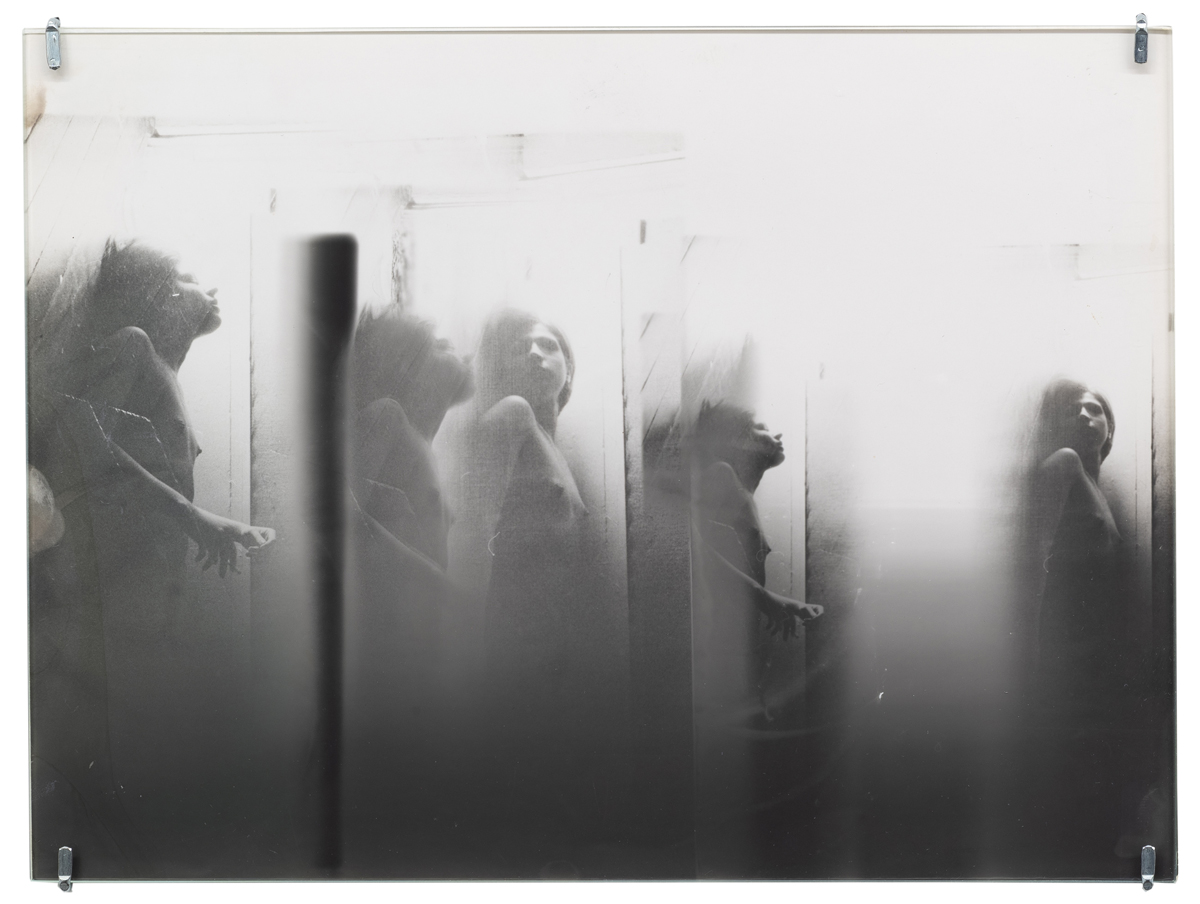
Leaving the shutter open for ten, twenty, or thirty seconds, she moved in front of the lens with no specific result in mind. In a letter to her family she compared this method to gestural painting done with the body: “I am my own paintbrush.”2 Months in the darkroom followed, each print being reworked until it matched her vision. Then she destroyed the negatives. None survive. Every print is therefore unique.
For a long time Roubaud was known mainly through her journal, published posthumously in 1984. The photographs are the other half of her legacy, recovered largely through Giannecchini's research over the past fifteen years. The exhibition insists that the two halves are one practice, and the claim is persuasive. A diary exists only as long as it is taken up again each day, and Roubaud treated her self-portraits in the same way, with a discipline that Giannecchini’s exhibition text describes as a kind of asceticism. Both also record a self that partly disappears in the act of being recorded: a long exposure registers presence as a blur, a trace of time rather than a fixed image, just as a diary entry registers a day that is already gone.
It matters, too, that the journal is where Roubaud, who studied philosophy and worked closely on Wittgenstein, wrote her theory of photography. The text is not a caption to the images; it is where they are thought.
The series includes images that invite a biographical reading – Roubaud died of a pulmonary embolism in 1983 at the age of 31 – and the exhibition is at its best when it resists this. In one image, Roubaud lays a childhood portrait over the exposure, describing the result in her journal as herself as a laughing child in front of her dead body. It would be easy to read this as a premonition of her early death, but the gesture is also a statement about the medium: a photograph is always a present image of a vanished moment.
The exhibition’s title, translating as ‘If something is black’, works the same way. Black stands for mourning or the absence of someone or something. For the photographic image it is also the absence of light, a necessary condition.
Roubaud’s photographs are suffused with emptiness: a woman alone in a dark room, the space around her heavy with absence. Sunlight presses in from outside, yet she seems unable to follow it out. The light does not console; it marks the distance between her and the world beyond the walls.
The final image of the series shows her lying across the body of her husband, Jacques Roubaud. His silhouette is sharp; hers, from a shorter exposure, is translucent, as if already half gone. It can be read as a woman fading beside the poet who would later edit her journal. It can just as well be read as an image in which she decides, down to the second, who remains legible.
Much depends on this difference, since the first reading is the one her biography invites. Roubaud died in 1983, shortly before the Rencontres d’Arles, where she had been selected for an exhibition called Les Gens de l’éphémère / People of Transience, and that title has framed her as a figure of vanishing ever since. Even her journal reached readers only through her husband’s release. The question of who remains legible, which the final image stages, is therefore also a question about who gets to tell her story.
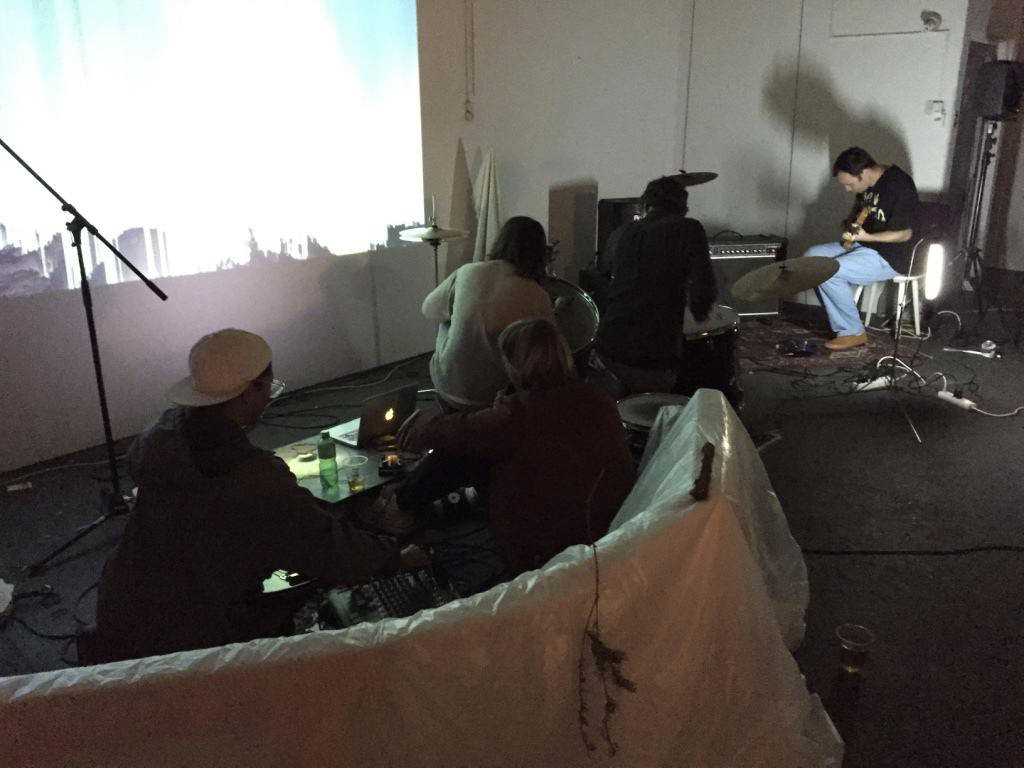
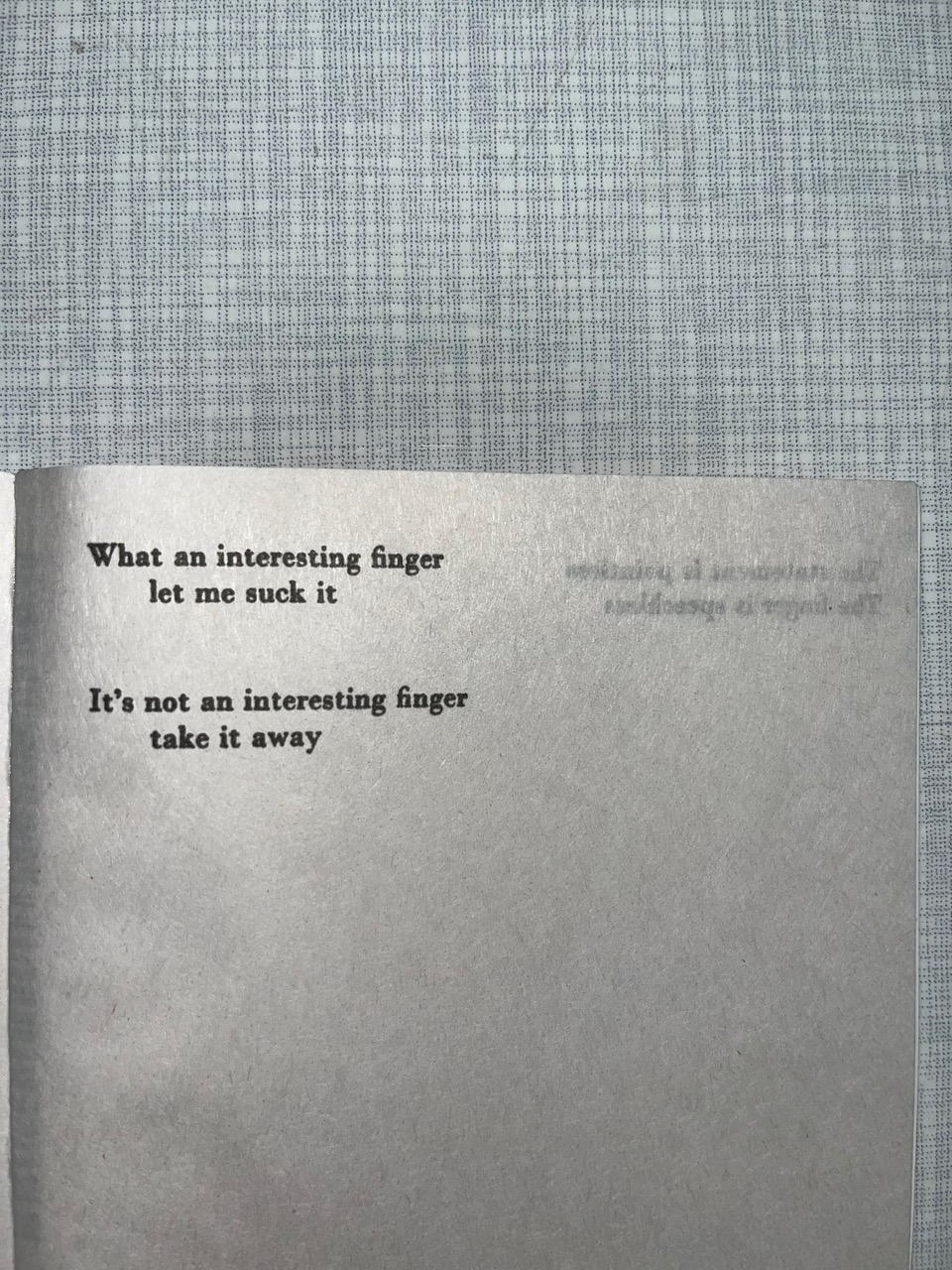
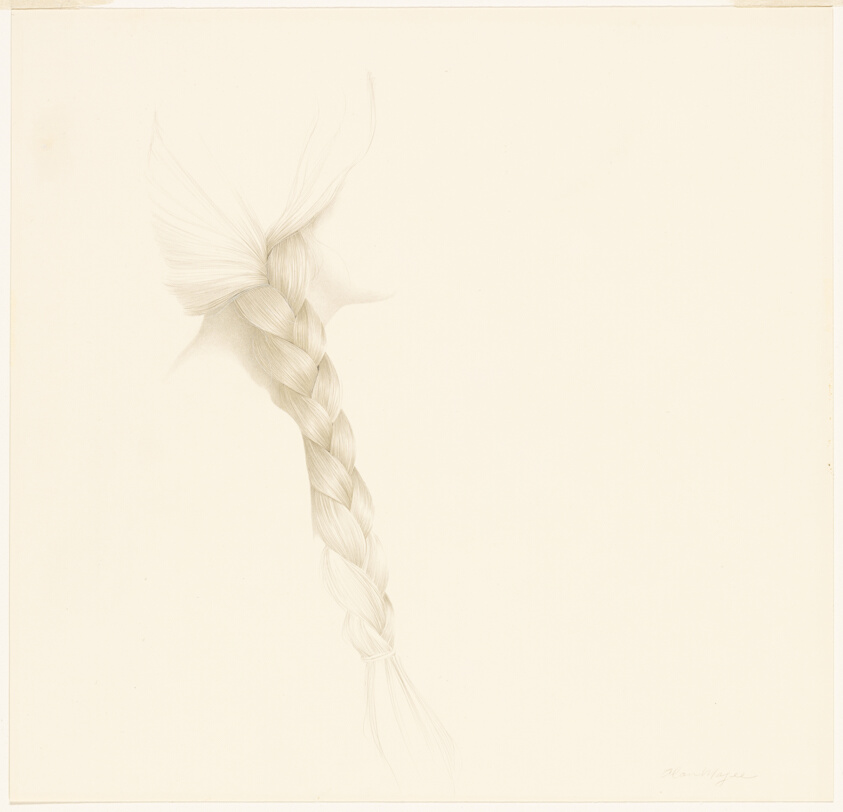
Moyra Davey’s video Forks & Spoons (2024) takes up this question from another direction. First shown in a group exhibition she curated at Galerie Buchholz New York and screened at the n.b.k. in Berlin, it studies five photographers: Francesca Woodman, Carla Williams, Alix Cléo Roubaud, Justine Kurland and Shala Miller. For Davey, what links them is the way their images of women’s bodies resist the conventions by which such bodies are usually represented. Rather than approaching them through their biographies, she turns to their own written voices, as Roubaud did herself. Over footage of herself walking among mossy tree trunks, close-ups of worn book pages and her own hands leafing through photobooks, Davey places each photographer’s work in the context of her own life and restages images from their archives as self-portraits.
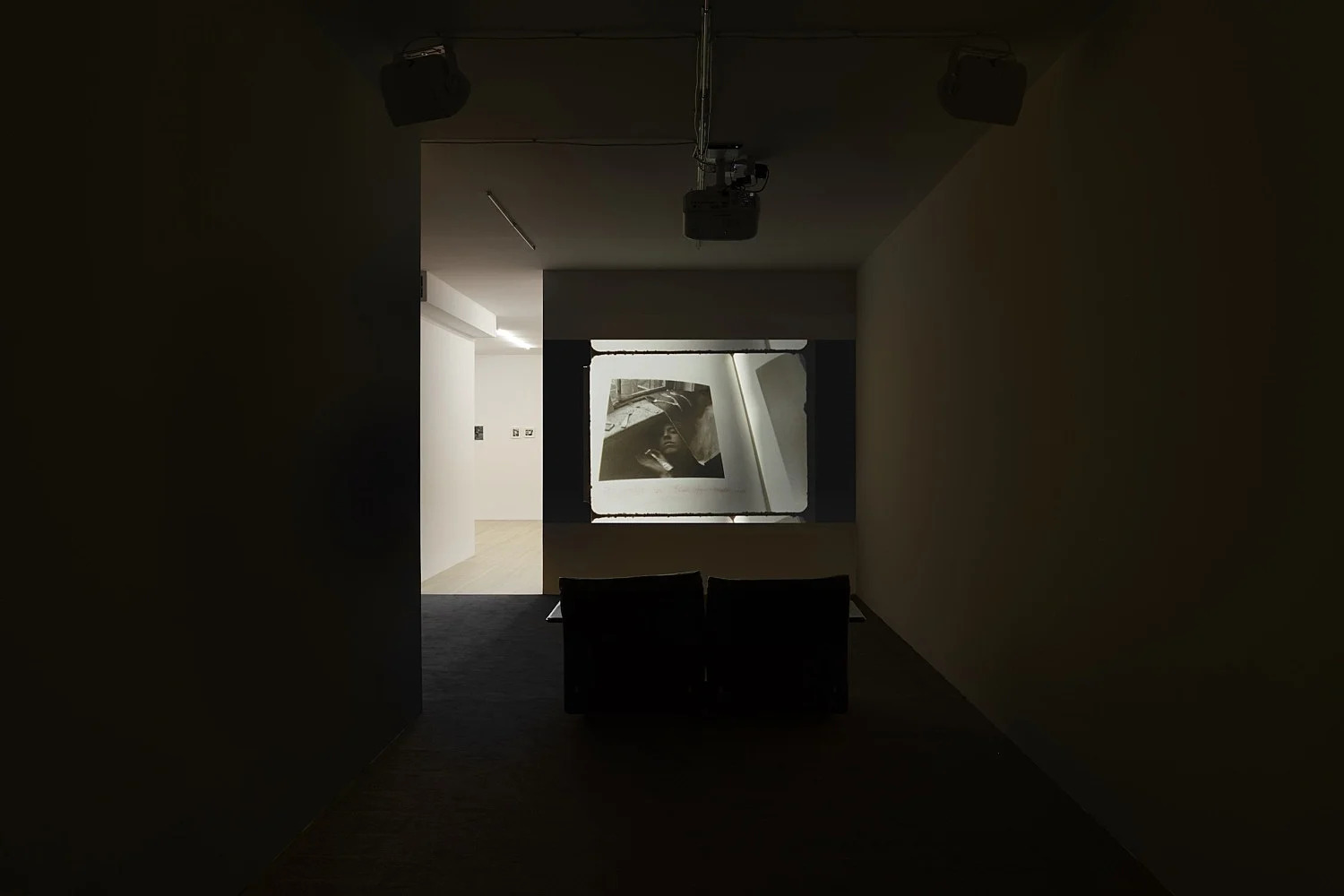
Davey’s first-person essay, in which reading, looking and writing cannot be separated, is a present-day counterpart to Roubaud’s own mix of journal and darkroom. It also opens a way beyond the purely biographical reading her short life invites. The biography remains present, but as a way into the images rather than a replacement for them.
Title image: Alix Cléo Roubaud, untitled (Correction de perspective dans ma chambre / Correction of perspective in my bedroom), 1980, silver gelatin print, multiple exposures. Courtesy of Galerie Buchholz
1 Alix Cléo Roubaud, “Journal”, Dalkey Archive Press 2010.
2 Alix Cléo Roubaud, Undated Letter to Her Family, 1980–1981, Alix Cléo Roubaud Collection.