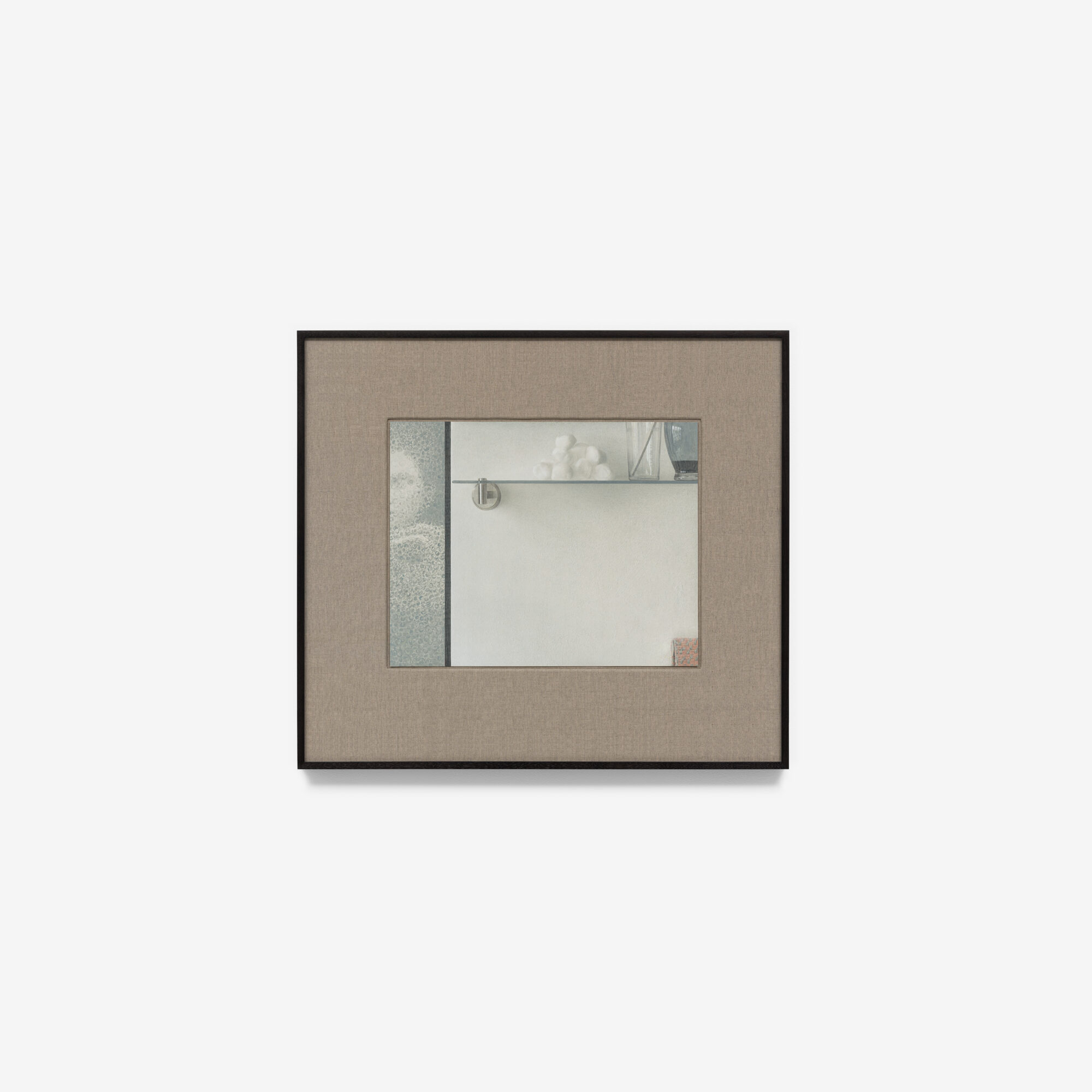
Someone is waiting behind the pebbled glass. In Graham Little’s Untitled (Frosted Glass), the corner of the towel rack is still; so is the pile of cotton balls on the shelf; so are the reflections in the tasteful toothbrush cup. But there is still someone waiting – softly, flatly – behind the bathroom door.
On my way into Alison Jacques, I pushed against the glass sliding doors, and they wouldn’t open. I couldn’t see a handle, and I felt embarrassed, blinking from the street at the gallery assistants sitting behind the front desk. Knocking on glass; attempting to enter a resistant proscenium fitted with smooth, white surfaces and shadow gaps: it was as if Little’s paper worlds had expanded into three dimensions, swallowing up the Cork Street gallery and turning everything to cool, vitreous suspension.
Little’s paintings do not let you in. The Scottish artist is known for his meticulous, jewel-like compositions in gouache, featuring paper-doll figures in impenetrable interiors drawn from fashion photography and advertising. In this recent body of work Little’s attention shifts away from the figure, allowing objects that act as props in a fashion or lifestyle spread take on a life of their own: flowers in a vase, a pearl earring.
The remoteness of Little’s painted scenes is fed by their immovable beauty – or is it the other way round? Each gouache feels like a petri dish, in which the constituent parts of a “beautiful” image are isolated, examined, and mixed back together with care. This sense of controlled observation is a direct result of Little’s process: the compositions begin as dioramic assemblages in the artist’s studio, constructed from paper cutouts, found objects, and imagery from his collection of books and magazines.
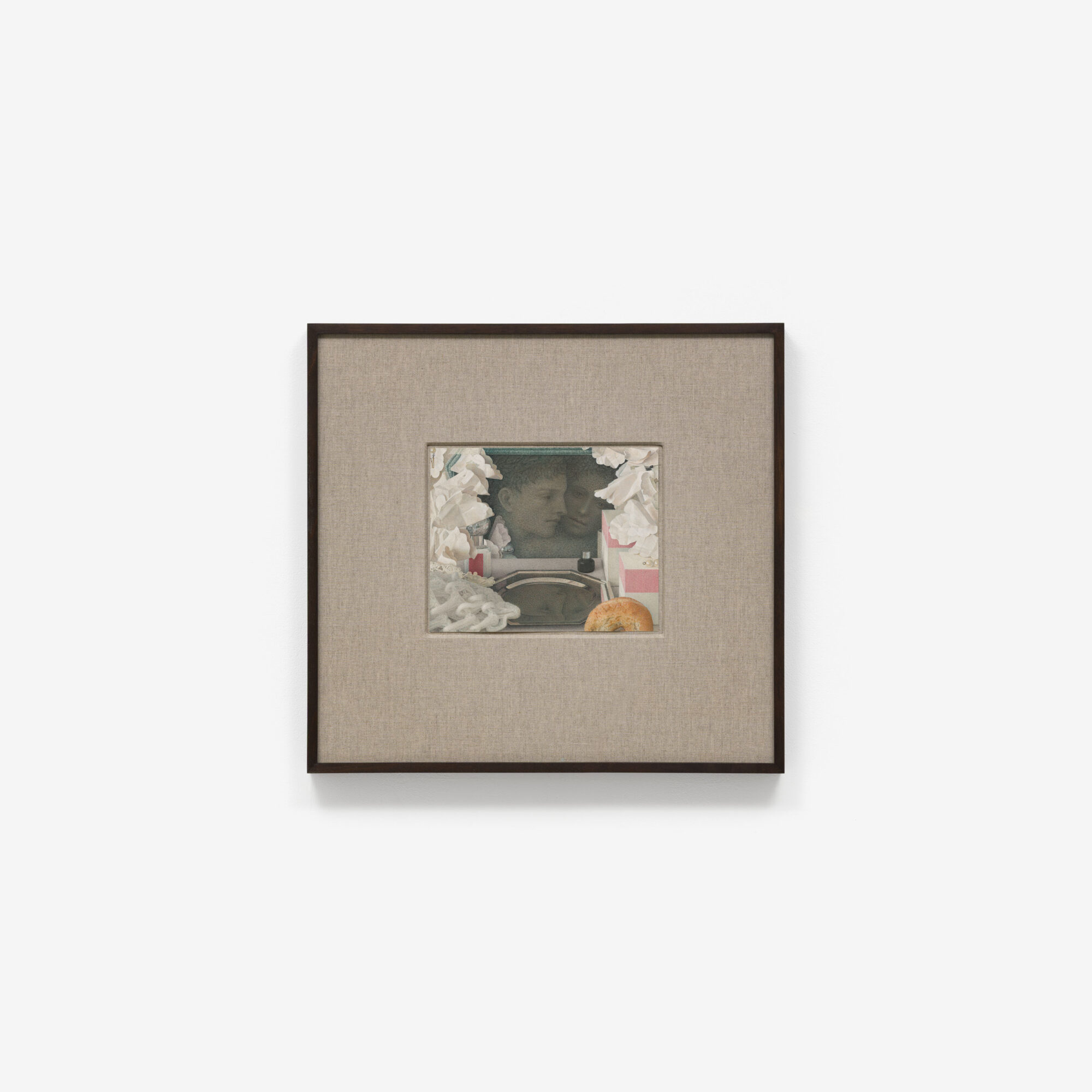
As in Untitled (Frosted Glass), many of Little’s recent gouaches translate interior scenes into still life. Figures – if they are present at all – recede into the background, turn away, or are included as mimetic forms: a statue, a reflection. Objects, loaded with unsettling animacy, take the place of living bodies. Perfume bottles, mirrors and cotton balls become saintly attributes gone rogue, unmoored from their proprietors and taking on a life of their own. Spheres recur across the exhibition, and as I moved among them, I was trailed by the image of a perfect egg hanging in the cavity of a scallop shell vault. In Piero della Francesca’s famous Montefeltro Altarpiece, the suspended sphere works like the peal of a bell, a signal for silence; Little’s desaturated colours and crisp geometry have a similar effect.
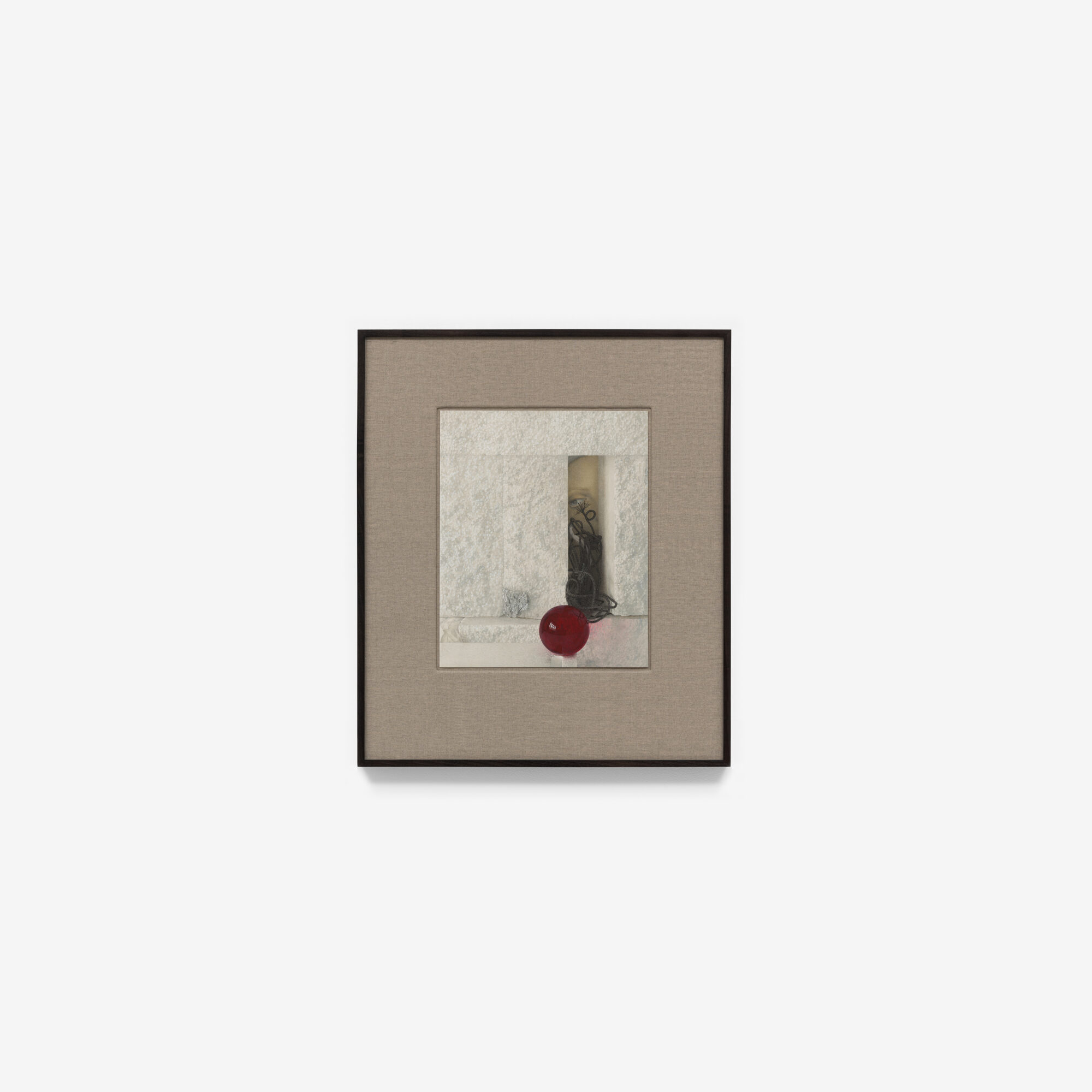
Little’s work is sometimes discussed in relation to Édouard Vuillard’s (1868 - 1940) paintings of domestic spaces. Here, though, Little reverses Vuillard’s formula. The frequent strangeness of the French painter’s interiors comes from his choice of vantage point: Vuillard often seems to be depicting rooms and figures from the doorway, or over someone’s shoulder, or from a corner, hidden. We imagine him as a watching lingerer, a threshold-dweller. In several of Little’s new works, the unseen watcher, the engine of Intimist painting, is made visible – if only partially. Untitled, 2026 shows an eye peeking through a mass of tangled cord, bounded by polystyrene bricks; in Untitled (Marker Pen), a faceless woman looks out toward a curtained window in the house opposite, poised with a blank canvas on her lap, as if waiting for her subject to emerge.
Elsewhere, the camera – the ultimate object analogue for the disembodied eye – is given a corporeal heft. The cameras in Untitled (Apple Blossom) cluster and jostle against a mirrored surface, perhaps the only intimation of movement in the exhibition. They seem hungry. If there are appetites here, in Little’s snow-globe worlds, they revolve around the mediation of vision. Mirrors, picture-postcards, and the ever-present reflective surface: these technologies of representation are the exhibition’s anchors.
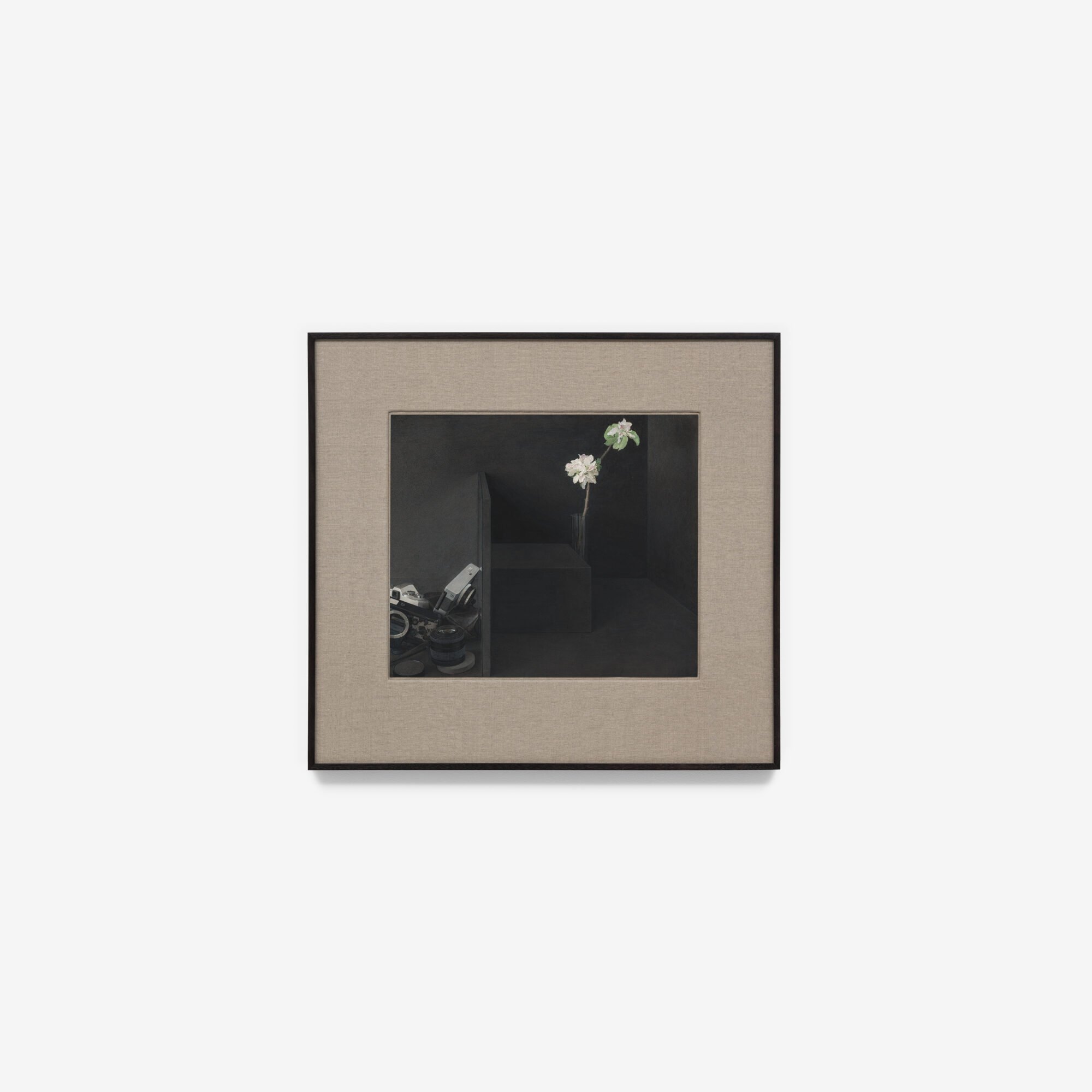
Little’s turn away from the figure and towards the object feels closer to a continuation than a modification of his existing practice. Within his paintings, people and things become fungible: all are treated as luminous, unknowable surfaces, and sometimes the glisten on a camera lens is more alive than a smooth, rosy cheek.
Image Credits: © Graham Little and Alison Jacques